< Clicking the image will display it in full screen. >
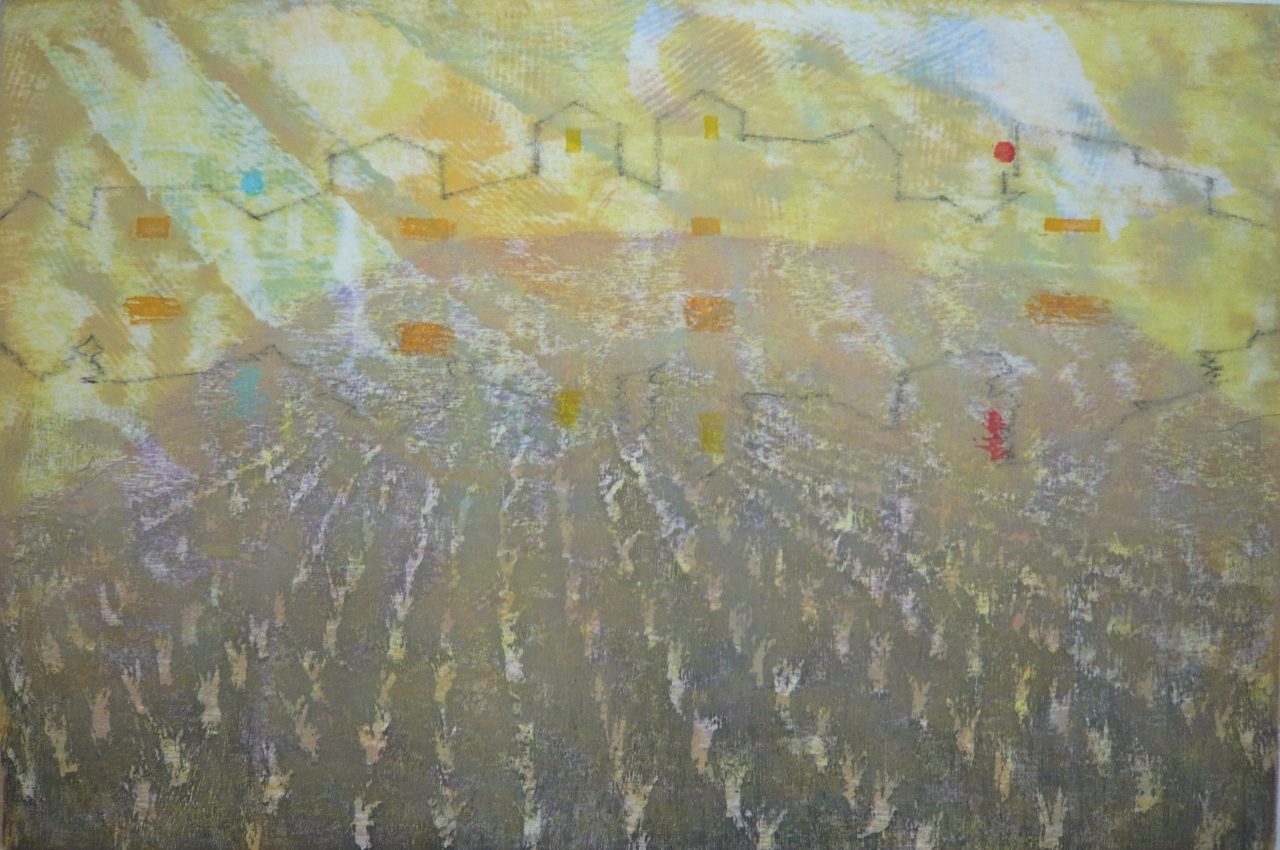
Yugure
It was 35 years ago that I built a house here after looking for land.
To the south is Mt. Fuji, to the west are the Shirane Sanzan, Hakuho Sanzan, and Kaikomagatake, to the north are the Yatsugatake, Mizugakiyama, Kinpusan, Kokushidake, and Kobushigatake, and to the east are the Daibosatsurei mountains, and many of the 100 famous mountains in Japan that are over 2,500 to 3,000 meters high.
In addition, the mountains of Misaka, such as Shakagatake, Odake, and Hirugatake, are the foremountains of Mt. Fuji, and the mountains of Kushigatayama and Shichimensan, which are the foremountains of the Southern Alps, Kentokusan and Shosenkyo and their mountains to the north, and the Sasago mountain range to the east.
The Kofu Basin where I live is protected by a double mountain range that is shaped like a mortar. The mountains seen from the bottom of the mortar are divine.
When I first moved here, there were no houses to the east of my house, but rice fields. I could see a single two-car train running beyond the rice fields. At dusk, the sight of the train lights reflected on the rice paddies reminded me of a painting by Taniuchi Rokuro. I enjoyed the cool breeze blowing through the summer rice paddies.
The rice ears were golden, and as the harvest and threshing began, the smell of straw and rice husks filled the fields. Walking along the footpaths, I really felt the autumn harvest.
I love the autumn harvest, but the most pleasing scene is when the rice paddies are filled with water, the seedlings are planted, and the flimsy young seedlings become firm within a few days. In the evening, as the sun sets over Nishiyama, I am enveloped in a gentle, warm light. The lights come on in the houses.
It’s the most gorgeous time of the year. When you take a walk through it, it feels like everything blends together and time stands still.